The Maine Coon is much more than just a large cat with an impressive coat. Its roots can be traced back to the northeastern United States, where the breed adapted to a harsh climate. To this day, fascinating legends surround its origins. Here you'll find interesting facts about the breed, practical tips for everyday life with a cat, and insights into nutrition, grooming and enrichment.
01 · Die Geschichte der Maine Coon
Expand to Read the Story
Seit mehr als 30 Jahren ist die Maine Coon eine der beliebtesten Katzenrassen in Europa und darüber hinaus. Die Maine Coon ist eine amerikanische Hauskatzenrasse, die im Nordosten der USA, im Bundesstaat Maine, entstand. Dabei erhielt sie einen Teil ihres Namens.
Myths & Legends
The name "Maine Coon" is often associated with the word "raccoon" (sometimes called "coon" in English), which is why the breed is also known as the American Forest Cat. In 1985, the Maine Coon was officially named the State Cat of Maine. Over the years, many myths and legends have emerged about the origins of this fascinating breed. One popular theory suggested that Maine Coons were the result of a mating between a domestic cat and a raccoon. However, this theory has been scientifically disproven, as such a cross is biologically impossible. Another legend is connected to the French Queen Marie Antoinette, who was said to have had a particular fondness for fluffy cats. According to the story, her long-haired cats were brought to America, where they mated with local wild cats, eventually giving rise to the Maine Coon. Another theory links the Maine Coon to the Norwegian Forest Cat. Because the two breeds share many similarities, it has been suggested that their ancestors arrived in North America with the Vikings more than 1,000 years ago. Over centuries, these cats supposedly bred with local cats, eventually developing into the Maine Coon. A further theory suggests that cats living in New England gradually adapted to the region's harsh climate and cold winters. Cats with thinner coats were less likely to survive, while those with thicker, weather-resistant coats adapted naturally over generations. Which of these theories is actually true remains unknown. What we do know is that sailors often kept cats aboard their ships. As they travelled between countries and stopped at different ports, some of these cats went ashore and settled in new places, where they bred with local cats.
Breeding & Cat Shows
It was not until the 1960s that the Maine Coon, originally a farm and domestic cat, began to be selectively bred. By around 1980, the breed had gained recognition from the major international cat associations, including the Fédération Internationale Féline in 1982. At agricultural fairs, such as the Skowhegan Fair, the most beautiful cat in Maine was selected. The winning cat was awarded the title "Maine State Champion Cat". Maine Coons were first mentioned in literature in 1861. A Maine Coon tomcat named Captain Jenks won an exhibition in that same year. Shaddy Cats were also mentioned as a distinct breed. On 8 May 1895, at a cat show organised by the Central Maine Cat Club at Madison Square Garden in New York City, a female brown tabby Maine Coon named Cosey was exhibited. She immediately won first prize at the show.
A Period of Decline
At the beginning of the 20th century, exotic breeds such as Persians and Siamese cats became increasingly popular, pushing the Maine Coon into the background. The breed nearly disappeared from the show scene. At that time, very few cats remained available for breeding. One of the main challenges facing the Maine Coon was its extremely limited genetic diversity. To strengthen the breeding population, foundation cats with typical Maine Coon characteristics were selected from natural populations.
Five cats were chosen:
- Bridget Katt of Heidi Ho from Florida
- Andy Katt of Heidi Ho from Maryland
- Dauphin de France of Tati-Tan from New York
- Tatiana of Tati-Tan from New York
- Smokie Joe of Whittenmore, the only cat from Maine
In 1978, Heidi Ho Sonkey Bill was born. His descendants and great-grandchildren were related to Andy and Bridget Katt of Heidi Ho, as well as Tanstaafl Polly Adeline. Their offspring looked remarkably similar, which led breeders to refer to them as "Clones". Breeders repeatedly used these lines in their breeding programmes. The cats had excellent show qualities and increased in size. Their inbreeding coefficients were around 9.4%. Today, many Maine Coons have approximately 35% Clone ancestry in their pedigrees, and in some cases even as much as 50%.
Health & Genetic Conditions
Close breeding and the limited genetic pool also contributed to inbreeding. Changes in the genetic makeup of the breed have been associated with certain hereditary conditions, including hypertrophic cardiomyopathy (HCM). This heart condition can lead to sudden cardiac death. However, it can often be managed with medication. Regular heart examinations using ultrasound are recommended every two to three years. Another genetic trait associated with certain breeding lines is polydactyly. It causes cats to have more toes than usual on their paws. Its acceptance in breeding is a subject of debate. Under the TICA Maine Coon breed standard, polydactyl Maine Coons are permitted. Other associations do not allow this trait in breeding, as it may be classified as an extreme breeding characteristic under animal welfare legislation. Approximately 40% of the original MCO population was affected by this trait. Other conditions relevant to the breed include: SMA – Spinal Muscular Atrophy HD – Hip Dysplasia PKD – Polycystic Kidney Disease
Their Gradual Return to the Show Scene
The Maine Coon gradually began to reappear at cat shows and received an overwhelmingly positive response. As interest in the breed grew, an official breed standard was developed. In May 1976, the Cat Fanciers' Association (CFA), the last major American cat association to do so, officially recognised the Maine Coon as a pedigree breed. Recognition in Europe took a little longer. It was not until 1983 that the breed was recognised by the Fédération Internationale Féline d'Europe (FIFe). Today, several major cat associations recognise the Maine Coon, including: FIFe, WCF, CFA, TICA
Characteristics of the Maine Coon – One of the Largest Domestic Cat Breeds
The Maine Coon has a silky, semi-long coat, a beautiful ruff around the neck and a magnificent bushy tail. The fur is generally shorter along the sides of the body, while it grows longer around the hind legs (forming characteristic "britches") and on the belly. Its impressive body is long, muscular, strong and robust, supported by sturdy legs. The head is large and square-shaped. The distinctive muzzle, upper lip, nose and strong chin form a characteristic profile. The ears are set high on the head, with prominent tufts that give them a lynx-like appearance. The large, slightly oval eyes are set at a gentle angle towards the ears but should not be almond-shaped. Eye colour should harmonise with the coat. Their large paws resemble snowshoes, helping them cope with cold and snowy conditions. Typical weight ranges are: Male cats: approximately 5.5–10 kg Female cats: approximately 4–7 kg From the tip of the nose to the end of the tail, a Maine Coon can reach a total length of up to 120 cm. Almost all coat colours are accepted. Chocolate, lilac, cinnamon, amber, golden, pointed and fawn varieties are excluded under the relevant breed standard. Breed type: Semi-longhaired cat Country of origin: United States of America Behind their impressive size and luxurious coat lies a personality that is often described as dog-like. Maine Coons are truly the gentlemen of the cat world. They are sociable, friendly and affectionate cats that generally get along well with children, dogs, other cats and different breeds. Maine Coons are very people-oriented and love being close to their families. When they want to play, they often make charming trilling sounds to get your attention. Some even enjoy fetching their favourite toys! They communicate using a wonderful variety of sounds, including trills, chirps, squeaks, hisses and meows.
Equipment & Everyday Care
The Maine Coon is an active and playful cat that loves to hunt, explore and romp around. Due to its impressive size, it also has some special requirements when it comes to equipment and living space. A large and sturdy scratching tree, spacious litter boxes, generous resting areas and plenty of room to play and explore are essential. Of course, Maine Coons are happiest when they can enjoy safe outdoor access in a secure environment. Regular coat care is also very important to prevent tangles and matting and to keep their beautiful coat in good condition. Maine Coons are slow-maturing cats and may take around four to five years to reach full physical maturity. Their average life expectancy is approximately 12–15 years. Despite their size and lively nature, Maine Coons make wonderful family companions. They are friendly, gentle and adaptable cats – lifelong companions you will never want to be without. Maine Coons are among the most frequently represented breeds at cat shows. To support genetic diversity, maintain breed standards and introduce new bloodlines, breeders sometimes import cats from other countries. These imports have traditionally come from countries such as the Czech Republic, Slovakia, Hungary, Croatia, Russia, Italy, Switzerland, Germany, Spain, Sweden, the Netherlands, England and occasionally even the United States. In my opinion, there are enough breeding males available in Austria. I can say this from my own experience, as I have three fellow breeders whom I am friends with, and we support one another whenever possible.
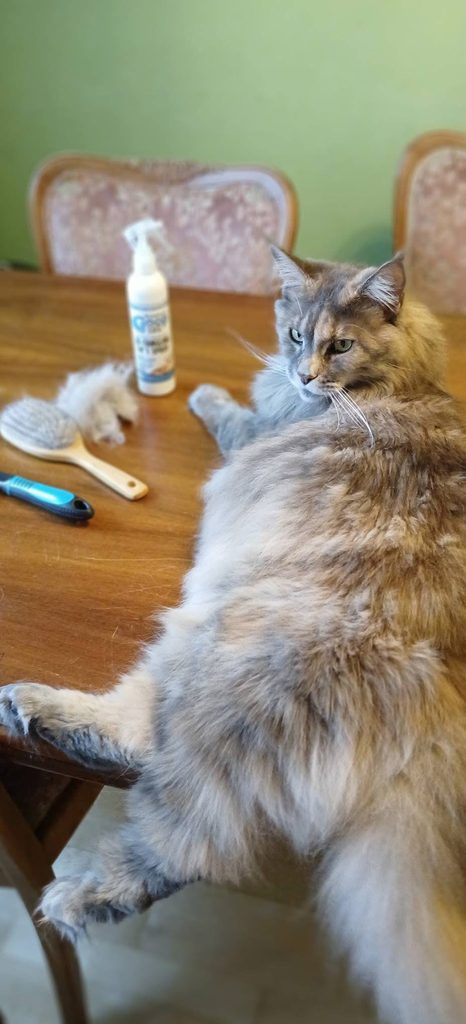
02 · Grooming & Everyday Care
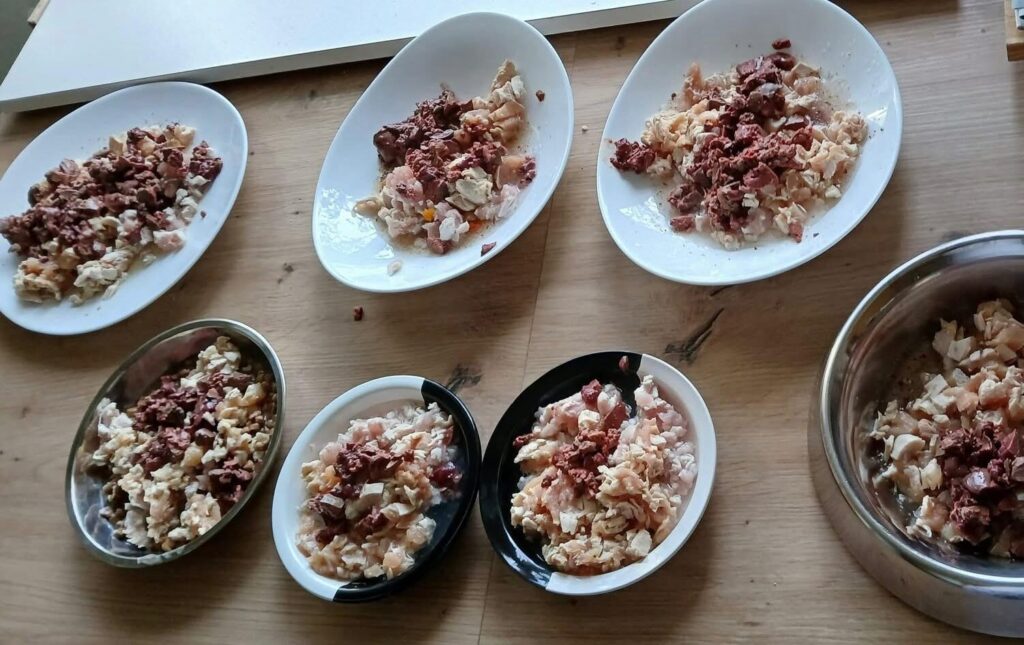
03 · Nutrition & Health
04 · Handmade Cat Toys